

If you’ve ever replaced a battery in a European car, you may have noticed that simply swapping out the old battery for a new one isn’t enough. Most modern European vehicles require a process called battery registration, which tells the car’s computer system that a new battery has been installed. Skipping this step can lead to charging problems, premature battery failure, and even damage to other electrical components. This article covers why European cars need special battery registration, what happens if you skip it, and how the process works.
Why Do European Cars Require Battery Registration?
European cars require battery registration because their charging systems are controlled by an intelligent battery management system (BMS) that monitors and adapts to the condition of the battery over time. When a battery ages, its ability to hold and accept charge changes. The BMS adjusts the charging voltage and current to match the battery’s condition, which helps extend its life and keep the electrical system running efficiently. Without registration, the car’s computer doesn’t know a new battery has been installed and continues to charge it as though it were the old, degraded one.
This intelligent approach to battery management is a hallmark of European manufacturers like BMW, Mercedes-Benz, Audi, Volkswagen, and Porsche. These brands have led the way in adopting complex electronic architectures that rely heavily on software to manage everything from engine performance to comfort features. The battery sits at the centre of all of this, providing the power that keeps every system running. Because of this, the BMS needs accurate information about the battery’s age, capacity, and type to manage charging correctly.
Japanese and other non-European vehicles are increasingly adopting similar systems, but European cars have used this technology for much longer and in more advanced ways. For Auckland drivers who own European vehicles, understanding battery registration is essential to avoiding costly electrical problems down the line.
What Is a Battery Management System?
A battery management system is an electronic control module that constantly monitors the state of your car’s battery. It tracks data points like the battery’s state of charge, state of health, voltage, temperature, and the number of charge and discharge cycles it has been through. Using this data, the BMS communicates with the alternator to control exactly how much charge the battery receives. This is a far cry from older vehicles, where the alternator simply pushed a fixed charge into the battery regardless of its condition.
In many European cars, the BMS also controls rest current management. When the car is parked and turned off, various modules continue to draw small amounts of power for things like alarm systems, keyless entry, and onboard memory. The BMS decides which modules can remain active and which should be shut down to preserve battery life. If the system doesn’t have accurate information about the battery, it can’t make these decisions correctly, which can lead to a flat battery or modules not functioning as expected.
What Happens During Battery Registration?
Battery registration is a software-based process carried out using a diagnostic tool that communicates with the car’s onboard computer. During registration, the technician inputs the details of the new battery, including its capacity (measured in amp hours), its type (such as AGM, EFB, or standard lead-acid), and its serial number or part number. The car’s BMS then resets its internal counters, clearing all the historical data it had stored about the old battery. From that point forward, it treats the battery as new and adjusts its charging strategy accordingly.
On some vehicles, particularly BMWs and Mercedes-Benz models, the registration process also involves coding the battery. This means the car’s software is updated to recognise the specific type and specification of the replacement battery. If the wrong battery type is coded in, or if the process is skipped entirely, the BMS may overcharge or undercharge the battery. Both scenarios can significantly shorten the life of the new battery and potentially cause damage to the vehicle’s sensitive electronic systems.
What Happens If You Skip Battery Registration?
Skipping battery registration on a European car is one of the most common mistakes made during DIY battery replacements, and the consequences can be serious. The most immediate issue is that the BMS continues to use the charging profile it had developed for the old battery. Since the old battery was likely degraded, the system would have been compensating by increasing the charging voltage. When this higher voltage is applied to a brand-new battery, it causes overcharging, which generates excess heat and accelerates wear on the battery’s internal plates.
Overcharging can also cause the battery’s electrolyte to break down more quickly, leading to gassing and potential swelling of the battery case. In AGM batteries, which are commonly used in European cars with start-stop systems, overcharging is particularly damaging because the sealed design means lost electrolyte cannot be replaced. The result is a new battery that fails in a fraction of its expected lifespan. Instead of getting four to six years of use, you might find the battery failing within one to two years.
Beyond the battery itself, the knock-on effects can spread to other parts of the electrical system. Fault codes may be stored in the BMS and other control modules, triggering warning lights on the dashboard. Features like start-stop functionality may stop working. In some cases, the car may even go into a reduced power mode to protect itself from what it perceives as a failing electrical system. For Auckland drivers dealing with stop-and-go traffic, losing start-stop functionality also means increased fuel consumption and higher running costs.
Can an Unregistered Battery Damage Other Components?
Yes, an unregistered battery can cause damage to other electrical components over time. The alternator is one of the first components at risk. When the BMS sends incorrect charging instructions to the alternator based on outdated battery data, the alternator may work harder than it needs to. This extra strain can lead to premature alternator failure, which is a significantly more expensive repair than the battery registration process itself. Alternator replacements on European cars can easily cost over a thousand dollars in parts and labour.
Other sensitive electronic modules can also be affected. European cars contain dozens of control units that rely on stable voltage to function correctly. Fluctuations caused by improper charging can lead to intermittent faults in systems ranging from the infotainment screen to safety features like ABS and electronic stability control. Diagnosing these kinds of intermittent electrical faults can be time-consuming and expensive, which is why it’s always better to get the battery registered properly from the start.
Which European Cars Require Battery Registration?
Almost all modern European cars built from the mid-2000s onwards require some form of battery registration. BMW was one of the earliest adopters, with models from 2002 onward requiring registration when a new battery is fitted. The BMW IBS (Intelligent Battery Sensor) system is one of the most well-known examples and is fitted to virtually every BMW model sold in Auckland today. If you own a BMW 1 Series, 3 Series, 5 Series, X3, X5, or any other model from the last two decades, battery registration is essential.
Mercedes-Benz vehicles use a similar system, and registration is required on most models from around 2005 onwards. Audi and Volkswagen, which share many electrical platforms under the VAG group, also require registration on most models fitted with a BMS. This includes popular Auckland vehicles like the Audi A3, A4, and Q5, as well as the Volkswagen Golf, Tiguan, and Passat. Porsche, MINI, and Volvo also require battery registration on most of their modern lineup.
It’s worth noting that the specific process and requirements can vary from model to model, even within the same brand. A 2010 BMW 3 Series may have a slightly different registration procedure compared to a 2020 model. This is why it’s important to have the work done by an auto electrician who has experience with European vehicles and access to the correct diagnostic equipment for your specific car.
Why You Need the Right Battery for Your European Car
Battery registration is only part of the equation. Fitting the correct battery in the first place is just as important. European cars are designed to work with specific battery types, capacities, and sizes. Many modern European vehicles require AGM (Absorbent Glass Mat) batteries, particularly those equipped with start-stop technology, regenerative braking, or high electrical demands from advanced infotainment and driver assistance systems. Fitting a standard flooded lead-acid battery in a car that requires an AGM battery can cause problems even if registration is performed correctly.
The battery’s capacity, measured in amp hours (Ah), must also match the manufacturer’s specification. Installing a battery with a lower capacity than what’s required can result in the battery being unable to meet the car’s electrical demands, especially during short trips or in cold Auckland winter mornings when the battery is under the most stress. On the other hand, installing a battery with a significantly higher capacity than specified can also cause issues, as the BMS may not be able to manage the charging cycle correctly for a battery outside its expected parameters.
Physical size matters too. European cars often have purpose-built battery compartments, sometimes located in the boot or under the rear seat rather than under the bonnet. The battery must fit precisely in the designated location, with the correct terminal orientation and hold-down arrangement. Using a battery that doesn’t fit properly can lead to vibration damage, poor connections, and even safety hazards. A specialist auto electrician will ensure the correct battery is sourced and fitted for your specific make and model.
The Role of Diagnostic Equipment in Battery Registration
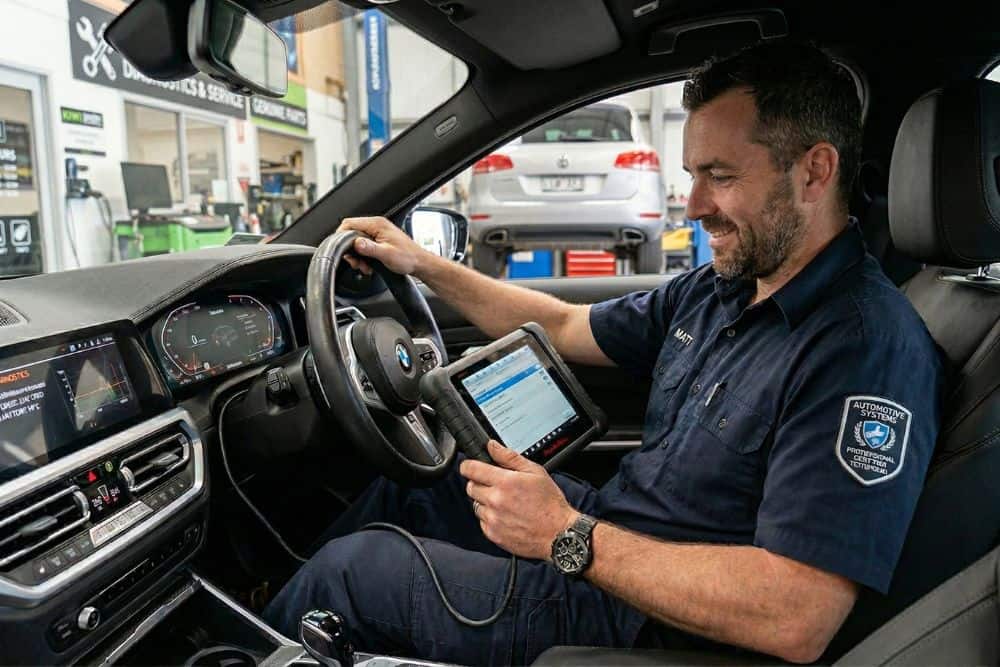
Battery registration cannot be done without the right diagnostic tools. Generic OBD2 code readers, which are popular for reading and clearing basic fault codes, typically do not have the capability to perform battery registration on European vehicles. The process requires either the manufacturer’s own proprietary diagnostic software or a high-quality aftermarket diagnostic system that supports battery registration for specific makes and models.
For BMW vehicles, the standard dealer tool is ISTA, while Mercedes-Benz uses Xentry. VAG group vehicles (Audi, Volkswagen, Porsche, SEAT, Skoda) use ODIS or similar platforms. These systems allow the technician to input the exact battery specifications and complete the registration or coding process correctly. Quality aftermarket tools from brands like Autel and Bosch can also perform battery registration on many European vehicles, provided they are kept up to date with the latest software.
At Eurosparx, we use advanced diagnostic equipment that covers a wide range of European and Japanese vehicles. This means we can perform battery registration accurately and efficiently, ensuring your car’s BMS has the correct information from the moment the new battery is installed. Having the right tools makes the difference between a proper battery replacement and one that could lead to ongoing problems.
Common Signs Your European Car Needs a New Battery
Knowing when your European car’s battery is on its way out can save you from being stranded. One of the most common signs is slow engine cranking when you turn the key or press the start button. If the engine takes noticeably longer to turn over, especially on cold mornings, the battery may be losing its ability to deliver the high current needed for starting. Modern European cars may also display a battery warning light or a specific message on the dashboard telling you that the battery’s state of charge is low.
Other signs include electrical accessories behaving erratically, such as flickering interior lights, the infotainment system resetting itself, or power windows moving more slowly than usual. If your car’s start-stop system stops functioning, this is often a sign that the BMS has detected the battery is no longer healthy enough to support the feature. Some drivers also notice that their car takes longer to lock or unlock with the keyless entry system, as the body control module reduces functionality to conserve battery power.
If you notice any of these symptoms, it’s a good idea to have your battery tested before it fails completely. A professional battery test can measure the battery’s state of health and cold cranking amps to determine whether it still has enough life left or whether replacement is needed. Having the test done by a specialist who understands European cars ensures that the results are interpreted correctly and that any replacement includes proper registration.
Need Your European Car Battery Replaced and Registered?
Battery registration is a critical step that should never be skipped when replacing the battery in a European vehicle. It ensures the car’s battery management system has the correct information to charge and manage the new battery properly, which protects the battery, the alternator, and every other electrical system in the car. Getting the right battery and having it professionally installed and registered will save you money and headaches in the long run.
As experienced auto electricians and suppliers of car batteries in Auckland, Eurosparx specialises in European and Japanese vehicles and can supply, fit, and register the correct battery for your car. We have the diagnostic tools and expertise to make sure the job is done right the first time. Contact our team today by calling 09 218 7789 to book your battery replacement.
Frequently Asked Questions
What is battery registration on a European car?
Battery registration is a software process that tells your European car’s battery management system (BMS) that a new battery has been installed. Using a diagnostic tool, a technician inputs the new battery’s details, including its type, capacity, and specifications. The BMS then resets its internal data and adjusts its charging strategy to suit the new battery, ensuring correct charging voltage and proper management of the vehicle’s electrical systems.
What happens if I don’t register my new car battery?
If you skip battery registration, your car’s BMS will continue charging the new battery as if it were the old, degraded one. This typically results in overcharging, which generates excess heat and dramatically shortens the new battery’s lifespan. You may also experience dashboard warning lights, loss of start-stop functionality, stored fault codes in multiple control modules, and in some cases, premature failure of the alternator or other electrical components.
Can I register a car battery myself?
In theory, you can register a car battery yourself if you have the correct diagnostic tool and software for your vehicle. However, basic OBD2 code readers cannot perform battery registration on most European cars. You need a manufacturer-level or professional-grade aftermarket diagnostic system. Because incorrect registration can cause charging problems and damage, it’s generally recommended to have the process done by a qualified auto electrician with the right equipment.
Which European car brands require battery registration?
Most modern European car brands require battery registration, including BMW, Mercedes-Benz, Audi, Volkswagen, Porsche, MINI, and Volvo. BMW has required it on most models since around 2002, and other brands adopted similar systems from the mid-2000s onward. The specific procedure varies by make, model, and year, so it’s important to work with a specialist who understands the requirements for your particular vehicle.
How long does a battery last in a European car?
With proper registration and correct battery selection, a battery in a European car typically lasts between four and six years. Factors that affect battery life include driving habits, climate, the number of short trips versus longer drives, and the electrical demands of the vehicle’s accessories. Regular testing can help identify when a battery is nearing the end of its useful life, allowing you to replace it before it fails unexpectedly.
Does Eurosparx supply and register batteries for European cars?
Yes, Eurosparx supplies, installs, and registers batteries for a wide range of European vehicles, including BMW, Mercedes-Benz, Audi, Volkswagen, and more. Based in Avondale, West Auckland, we carry batteries suited to European specifications including AGM and EFB types. Our diagnostic equipment allows us to complete the registration and coding process correctly, ensuring your car’s electrical system operates as intended with the new battery.