

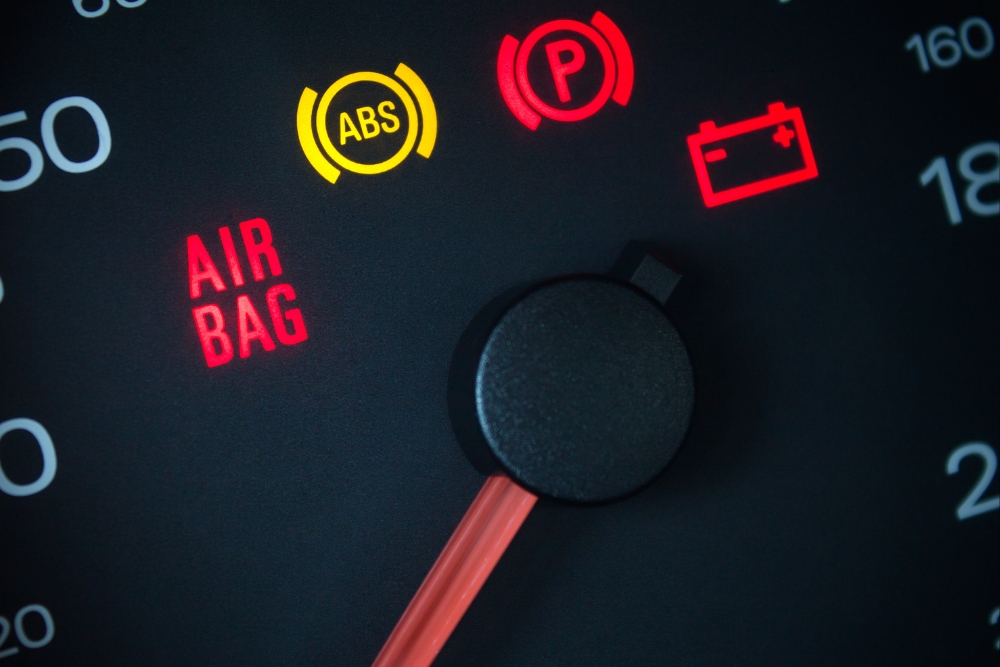
Car warning lights use a colour code to show how urgent a problem is. Red demands action straight away, and for oil pressure, overheating, brake or charging warnings that means stopping as soon as it’s safe.
Amber means a system needs attention soon, though how soon depends on the symbol. Green, blue and white lights normally show that a system is switched on. That colour code is the short version, and it only gets you halfway.
Two cars showing the same amber symbol can have completely different faults underneath, and in New Zealand a few of these lights will also cost you a warrant of fitness.
What Do the Colours of Your Car’s Warning Lights Mean?
The colour of a warning light tells you how quickly you need to act, and it’s the fastest way to work out whether you’re dealing with an emergency or a reminder.
Red is a high priority signal, amber is a “get it checked” signal, and green, blue or white are usually status lights.
Most makes sold in New Zealand follow this pattern, whether you drive a Toyota, a BMW, a Mazda or a Volkswagen, though the exact meaning of each symbol varies between models and your owner’s manual is the final word.
Here’s how the four colour groups compare across the things that matter most when a light appears.
| Light colour | What it’s telling you | How urgent | Common examples | What to do |
| Red | A safety or mechanical system needs attention now, or a fluid level or pressure is critical | Immediate | Oil pressure, coolant temperature, brake system, charging system | Pull over safely and stop the engine, then get advice before driving on |
| Amber or orange | A system has a fault, needs servicing, or has switched itself off | Soon | Engine management, ABS, traction control, tyre pressure, diesel particulate filter | Ease off, check the symbol in your manual and book a diagnostic scan |
| Green | A system you’ve turned on is active | None | Headlights, indicators, front fog lights, cruise control, eco mode | Nothing, this is confirmation only |
| Blue or white | A setting or convenience feature is switched on | None | Main beam, lane keep assist ready, cruise control set | Nothing, though switch main beam off for oncoming traffic |
The table gives you the rule, but the exceptions are worth knowing. Not every red symbol is an emergency, because seat belt reminders, open door warnings and the parking brake symbol are red on most vehicles.
Flashing means different things depending on the symbol as well, so a flashing engine light is a serious warning while a flashing stability control light usually means the system is doing its job.
What Should You Do If a Red Warning Light Comes On?
Pull over in a safe place and switch the engine off if the light relates to oil pressure, engine temperature, the brakes or the charging system.
Low oil pressure and overheating will damage the engine very quickly, a brake fault leaves you at risk of not stopping, and a charging fault will leave the car without the power it needs to keep running.
On an Auckland motorway that means indicating early, moving to the left shoulder or the next off-ramp, and getting well clear of live lanes before you stop.
For those four warnings, the safest option is a tow rather than a short hop to the nearest workshop.
An oil pressure light means the engine is no longer being lubricated properly, and carrying on will cause severe internal damage.
A charging system light means the car is no longer being charged properly, so it’s running on battery alone and will shut down without warning, often at an intersection.
Red symbols that simply remind you about a seat belt, an open door or the parking brake are the exception, and your owner’s manual tells you which red lights on your car mean stop.
What Should You Do If an Amber Warning Light Comes On?
Ease off, check what the symbol means in your owner’s manual, and book a diagnostic scan.
Most amber lights mean the vehicle’s computer has stored a fault code and put a system into a protected mode, which is why cars sometimes feel flat or refuse to rev past a certain point once the light appears.
Many amber warnings allow careful driving to a workshop, but the fault won’t fix itself and will often get worse or affect another system.
Avoid heavy loads, towing and long motorway runs until the cause is known. If the car loses power, feels unstable or shows a message alongside the symbol, stop somewhere safe rather than carrying on.
A misfire that starts as an amber engine light will damage the catalytic converter if it’s left alone, and that turns a modest repair into a costly one.
If the engine light starts flashing while you’re driving, ease off the accelerator and get the car looked at without delay, because a flashing engine light points to a misfire serious enough to damage the catalytic converter.
Are Green, Blue and White Lights Anything to Worry About?
No, green, blue and white symbols are confirmation lights rather than warnings. They tell you that something you’ve switched on, such as headlights, indicators, cruise control or fog lights, is currently active.
The only thing to watch is a symbol you didn’t turn on yourself, which usually means a switch has stuck or a sensor is misreading.
Blue almost always means the main beam headlights are on, and leaving them on in traffic dazzles other drivers.
White is used differently by different manufacturers, so European vehicles in particular use white for driver assistance features that are armed and ready.
A lit symbol confirms a system is switched on rather than proving every part of it is working, and if a green or white symbol changes colour to amber, the system behind it has developed a fault and needs checking.
What Do the Most Common Warning Lights Actually Mean?
The lights most New Zealand drivers see are the engine management light, the battery light, the oil pressure light, the coolant temperature light, the brake and ABS lights, the airbag light and the tyre pressure light.
Each one points to a specific system, and knowing which system is involved tells you how far you can safely drive. The sections below cover what each symbol means and what usually causes it.
What Does the Check Engine Light Mean?
The check engine light means the engine control unit has detected a fault in the engine, fuel or emissions system and stored a code. It looks like an engine block outline and is amber on almost every vehicle.
Common reasons the check engine light comes on include failing oxygen sensors, ignition coil or spark plug faults, vacuum leaks, a faulty mass airflow sensor and a loose or perished fuel cap seal.
A steady light means the fault has been logged and the car needs a scan. A flashing check engine light usually means the engine is misfiring badly enough to damage the catalytic converter, so ease off the accelerator and get it seen to without delay.
Because the light covers hundreds of possible codes, guesswork is expensive, and a proper scan of the engine control unit is the reliable place to start.
What Does the Battery or Charging System Light Mean?
The battery light means the charging system isn’t supplying power properly, and it points to the charging system rather than to the battery’s own condition.
The symbol is a rectangle with plus and minus terminals, and it’s red on most vehicles for good reason.
Once it appears while the engine is running, the car is drawing everything it needs from the battery, and a typical vehicle will run for only a short time before it stalls.
The usual causes are a failed alternator, a broken or slipping drive belt, corroded battery terminals or a failed voltage regulator.
Switch off the stereo, air conditioning, heated seats and any other load you don’t need, then pull over somewhere safe and call for help, because the engine will stop without warning.
Modern European vehicles complicate this further, because many use a smart charging system that varies alternator output, and a fault in that system will trigger the same light without any obvious symptom.
What Does the Oil Pressure Warning Light Mean?
The oil pressure light means oil is no longer circulating through the engine at the right pressure, and it’s one of the most urgent warnings on the dashboard.
The symbol looks like an old-fashioned oil can, and it’s red on virtually every vehicle.
Stop the car as soon as it’s safe and switch the engine off, because running an engine without oil pressure will destroy it in a matter of minutes.
Once stopped, check the oil level with the dipstick after the engine has cooled for a few minutes.
Topping up may clear the light if the level was simply low, but a light that stays on with a full sump points to a fault such as a failed oil pump, a blocked pick-up, worn bearings or a faulty pressure sensor.
Don’t confuse this light with the amber oil level or service reminder that some vehicles show, which is a maintenance prompt rather than an emergency.
What Does the Coolant Temperature Light Mean?
A red coolant temperature light means the engine is overheating and needs to be shut down.
The symbol is a thermometer sitting in wavy lines, and some vehicles show the same symbol in blue when the engine is still cold, which is normal and clears as it warms up.
Auckland’s stop-start traffic is hard on cooling systems, because there’s far less airflow through the radiator in slow traffic, so a marginal thermostat, water pump, radiator fan or hose shows up as overheating in town long before it does on the open road.
Pull over, switch the engine off, and if steam is escaping, stay clear until it stops before you open the bonnet.
Never remove a radiator or coolant cap while the system is hot, because it releases scalding coolant under pressure.
An electric cooling fan that has stopped working is a common cause on vehicles that only overheat in traffic and stay cool at motorway speed, and the cause there is often electrical, such as a failed relay, a fan motor or the wiring feeding it.
What Do the Brake and ABS Warning Lights Mean?
The red brake warning light means the handbrake is engaged, brake fluid is low or the braking system has a fault, while the amber ABS light means the anti-lock braking system has switched itself off.
Check the handbrake first, because a partly released lever or an electronic park brake that hasn’t fully disengaged is the simplest cause to rule out.
If the handbrake is off and the light stays on, stop driving and get the vehicle inspected, because low fluid usually means worn pads or a leak in the system.
With the amber ABS light on, your normal brakes generally still work but the anti-lock function won’t, so the wheels are likely to lock under heavy braking on a wet Auckland road.
If the red brake light and the amber ABS light are on together, treat it as a serious brake fault and stop driving.
Wheel speed sensors are a common cause, and they sit behind the wheels where they collect road grime, water and damage, though wiring faults, low voltage and the ABS module itself will also trigger the light.
This light also matters for compliance, and the details are covered further down.
What Does the Airbag or SRS Warning Light Mean?
The airbag light means the supplementary restraint system has a fault, and the airbags or seatbelt pretensioners are likely to fail to work properly in a crash.
The symbol shows a seated figure with a circle in front of them, and it’s red or amber depending on the vehicle.
Vehicles fitted with airbags run a self-check at ignition, so the light should come on briefly and then go out, and a light that stays on or never comes on at all both indicate a problem.
Common causes include corroded connectors under the front seats, a faulty clock spring in the steering column, a failed crash sensor and water damage in the footwells.
Connectors under the seats are worth knowing about, because the wiring there moves every time the seat is adjusted, though this is one part of the car to leave to a technician rather than inspect yourself.
This is one of the lights that will fail a warrant of fitness, so it isn’t something to leave until the next service.
What Does the Tyre Pressure Warning Light Mean?
The tyre pressure light means one or more tyres has dropped below the pressure the manufacturer set, or the monitoring system itself has a fault.
The symbol is a cross-section of a tyre with an exclamation mark, and it’s amber.
Check all four tyres with a gauge at the next service station and inflate them to the pressures shown on the placard inside the driver’s door.
Cold weather genuinely drops tyre pressures, so the light often appears on the first cold morning of the year, and the system is working exactly as intended.
On many vehicles, a light that flashes for about a minute at start-up and then stays on points to a fault in the monitoring system rather than the tyres, and a flat sensor battery or a sensor that wasn’t reprogrammed after new tyres were fitted are both possible causes.
What Does the Traction Control or Stability Light Mean?
A flashing traction control light means the system is working and the wheels are losing grip, while a steady light means the system has switched off or developed a fault.
The symbol is a car with wavy lines beneath it, and it’s amber.
Flashing during heavy rain or on a loose surface is completely normal and shows the electronics are managing wheelspin for you.
A light that stays on continuously means electronic stability control has either been switched off or has developed a fault, so the car won’t correct a slide the way it’s designed to.
Check first that you haven’t pressed the traction control off button, which is easy to knock in some vehicles.
Stability control faults often share sensors with the ABS, which is why the two lights frequently appear together.
Why Do Warning Lights Come On When Nothing Feels Wrong?
Warning lights react to sensor readings rather than to how the car feels, so a fault will be recorded long before you notice anything from the driver’s seat.
Emissions faults are the clearest example, because a failing oxygen sensor will trigger the engine light while the car still starts, idles and drives normally.
The system is designed this way on purpose, giving you time to book a repair instead of leaving you stranded.
Low voltage is the other big cause of lights that appear for no obvious reason.
When a car battery is failing or a connection is corroded, modules across the car receive unstable voltage and log faults that have nothing to do with the systems they control, which is why a weak battery will sometimes light up the ABS, stability control, and airbag lights at the same time.
Replacing or charging the battery clears the cause when low voltage was to blame, though the codes it left behind should still be read before anyone clears them.
Age plays a part too, and the New Zealand fleet is older than the fleets we’re usually compared with.
Light passenger vehicles here averaged 15.3 years old in 2024, based on Ministry of Transport fleet data, which puts our fleet roughly two to four years older than those in Australia, the United States, Canada and the United Kingdom.
On older vehicles, connectors corrode, wiring insulation hardens and sensors drift out of specification far more often than they do in a newer fleet.
Which Warning Lights Will Fail Your Warrant of Fitness?
Several dashboard lights are direct grounds for rejection at a warrant of fitness inspection, and the airbag, ABS and stability control lights are the main ones.
The NZTA inspection requirements list the airbag warning light as a reason for rejection when it either doesn’t operate or indicates a fault in the system.
That wording catches both extremes, so a car with a bulb removed to hide a fault fails just as surely as one with the light glowing.
The braking rules work the same way.
An inspector must reject a vehicle where the ABS or brake system warning lamp indicates a defect, and the requirements spell out that a defect includes an ABS light that doesn’t illuminate at ignition power-up or one that fails to turn off once the vehicle has been driven.
The same section requires rejection where a vehicle fitted with electronic stability control shows a warning light indicating a fault.
Brake pad wear warning systems are specifically excluded from that rule.
This is why the bulb check at start-up matters.
Those lights are meant to illuminate for a moment when you turn the key and then go out, and an inspector uses that sequence to confirm the system is alive and reporting honestly.
Getting a warning light diagnosed before your inspection saves you the return trip, and it matters because a free recheck after a failed warrant only applies within 28 days and at the same inspecting organisation.
How Do the 2026 Warrant of Fitness Changes Affect Warning Lights?
From 1 November 2026, inspectors will also check that no warning or malfunction indicators are showing for automatic emergency braking and lane keep assist systems where those systems are fitted.
That adds driver assistance faults to the list of dashboard lights with a compliance cost attached, which matters for the growing number of vehicles with cameras and radar sensors behind the windscreen and in the bumpers.
The same changes stretch the gaps between inspections.
Light vehicles aged four to fourteen years move from an annual warrant to one every two years, starting with vehicles registered on or after 1 November 2019, while those registered between 1 November 2013 and 31 October 2019 follow from 1 November 2027.
New vehicles get their second warrant at four years rather than three, and vehicles registered before 1 January 2000 move from six-monthly to annual checks.
Longer gaps between inspections put more weight on what your dashboard tells you.
For two years at a time, the warning lights on your instrument cluster are your earliest notice that something has gone wrong, so ignoring an amber symbol now carries more risk than it used to.
They don’t replace regular servicing, tyre checks and fluid checks, because plenty of faults never trigger a light at all.
How Do Auto Electricians Find Out Why a Warning Light Is On?
An auto electrician connects a diagnostic scan tool to the vehicle’s onboard port, reads the stored fault codes from every module, and then tests the circuits those codes point to.
The scan is the starting point rather than the answer, because a code identifies a circuit or a reading that’s out of range, not the part that has failed.
A code for a lean fuel mixture, for example, might come from a vacuum leak, a failing fuel pump, a blocked injector or a faulty sensor, and each of those needs a different repair.
Proper diagnosis then involves live data, wiring checks and voltage drop testing.
Watching sensor values change in real time while the engine runs shows whether a component is genuinely faulty or simply reporting a problem elsewhere, and voltage drop tests find the corroded joins and damaged wiring that cause so many intermittent lights.
This is where cheap code readers and parts-swapping fall short, because clearing a code without fixing the cause just means the light comes back.
Manufacturer-level equipment matters on European and Japanese vehicles in particular.
Generic scan tools often read engine codes only, while faults in the body control module, the airbag system, the comfort modules or the driver assistance systems stay hidden.
Systems with cameras and radar also need calibration after certain repairs or a windscreen replacement, and skipping that step leaves the assistance systems reporting faults even though the parts are fine.
What Should You Do the Moment a Warning Light Appears?
Look at the symbol and the colour together, then decide whether to stop immediately or carry on carefully to a safe place.
Red generally means stop as soon as it’s safe, amber generally means ease off and book a check, and your owner’s manual gives the exact instruction for the symbol in front of you.
Pull as far left as you can, put the hazard lights on, and get out of the vehicle on the passenger side if you’ve stopped anywhere near live traffic.
Once you’re safely stopped, a few quick checks are worth doing before you call anyone:
- Check the handbrake is fully released if the brake light is on
- Check the oil level with the dipstick if the oil pressure light appeared
- Look for steam, coolant on the ground or a burning smell if the temperature light came on
- Check the fuel cap is tight if the engine light appeared shortly after refuelling
- Note whether the light is steady or flashing, and what you were doing when it appeared
Write down or photograph the symbol before you drive on.
Some warning lights clear themselves once the engine is restarted, and knowing exactly which symbol you saw saves a great deal of diagnostic time later.
The fault code usually stays in the vehicle’s memory even after the light goes out, so a workshop can often still find it.
How Can You Stop Warning Lights Coming On in the First Place?
Regular servicing and a healthy battery prevent many of the warning lights that turn up unexpectedly.
Oil changes at the intervals in your handbook protect the engine’s moving parts and the variable valve timing systems that trigger engine lights when oil quality drops.
Battery testing every year from the third year onwards catches the low voltage that sets off unrelated warnings across the car.
Short trips are hard on Auckland vehicles, and lots of city drivers never give the alternator enough running time to fully replace what starting the car takes out of the battery.
If most of your driving is short suburban runs, a longer trip every couple of weeks or a battery maintainer will keep the battery in better condition.
Corroded or loose battery terminals cause the same symptoms as a failing battery, so they’re worth cleaning and checking whenever the bonnet is up.
Pay attention to the start-up bulb check as well.
When you turn the key, the cluster should light up briefly and then settle, and if a warning light that used to appear during that check has stopped appearing, a bulb or an LED has failed and a fault could now go unreported.
That’s easy to miss, and it’s exactly the sort of thing that leads to a surprise at inspection time.
Need Help With a Warning Light on Your Dashboard?
Car warning lights are your vehicle telling you something specific, and the difference between a cheap repair and an expensive one usually comes down to how quickly the message gets read properly.
Red means stop, amber means book it in, and a proper diagnostic scan is the only way to know what’s really behind the symbol.
As auto electrical diagnostic specialists in Auckland, Eurosparx can find the cause of any warning light on your dashboard, from engine management faults to airbag, ABS and charging system problems on European and Japanese vehicles.
Contact our team today by calling 09 218 7789 to book a diagnostic check and get your warning light sorted.
Frequently Asked Questions
Can I keep driving with a warning light on?
It depends on the symbol, not just the colour. Red warnings for oil pressure, overheating, the brakes or the charging system mean stopping as soon as it’s safe. Most amber lights allow careful driving to a workshop. Check the symbol in your owner’s manual, and stop if the car loses power or feels unsafe.
Will a warning light fail my warrant of fitness in New Zealand?
Some will. NZTA inspection requirements list the airbag warning light as a reason for rejection when it doesn’t operate or shows a fault, and the same applies to ABS, brake and stability control lights indicating a defect. From 1 November 2026, inspectors also check for warning indicators on automatic emergency braking and lane keep assist.
Why did my check engine light come on and then go off?
The fault that triggered it stopped happening, but a code is usually still stored in the engine control unit. Intermittent faults such as loose fuel caps, misfires under load and sensors that drift when hot will trigger the light and then clear it. A workshop can often still read the code.
What does it mean when the battery light comes on while driving?
The charging system has stopped supplying power properly, so the car is running on battery alone and will stall before long. Common causes are a failed alternator, a broken drive belt, corroded connections or a faulty voltage regulator. Switch off the stereo and air conditioning, then pull over somewhere safe and call for help.
Can I clear a warning light myself?
Using a basic code reader will switch many lights off, but it won’t repair the fault, and the light returns once the system runs its checks again. Clearing codes also wipes data a technician needs, and disconnecting the battery causes its own problems. Have the codes read and recorded first, then fix the cause.
How much does a diagnostic scan cost in Auckland?
Diagnostic charges vary between workshops depending on how long the fault takes to trace, since reading codes is quick but testing circuits and live sensor data takes longer. Ask for a quote when you book, and check whether the scan fee is credited against the repair. European vehicles often take more time.